
Include a Bitbucket markdown file
Here is a markdown file from the public repository atlassian/atlassian-jwt-js available at this url: https://bitbucket.org/atlassian/atlassian-jwt-js/src/master/README.md.
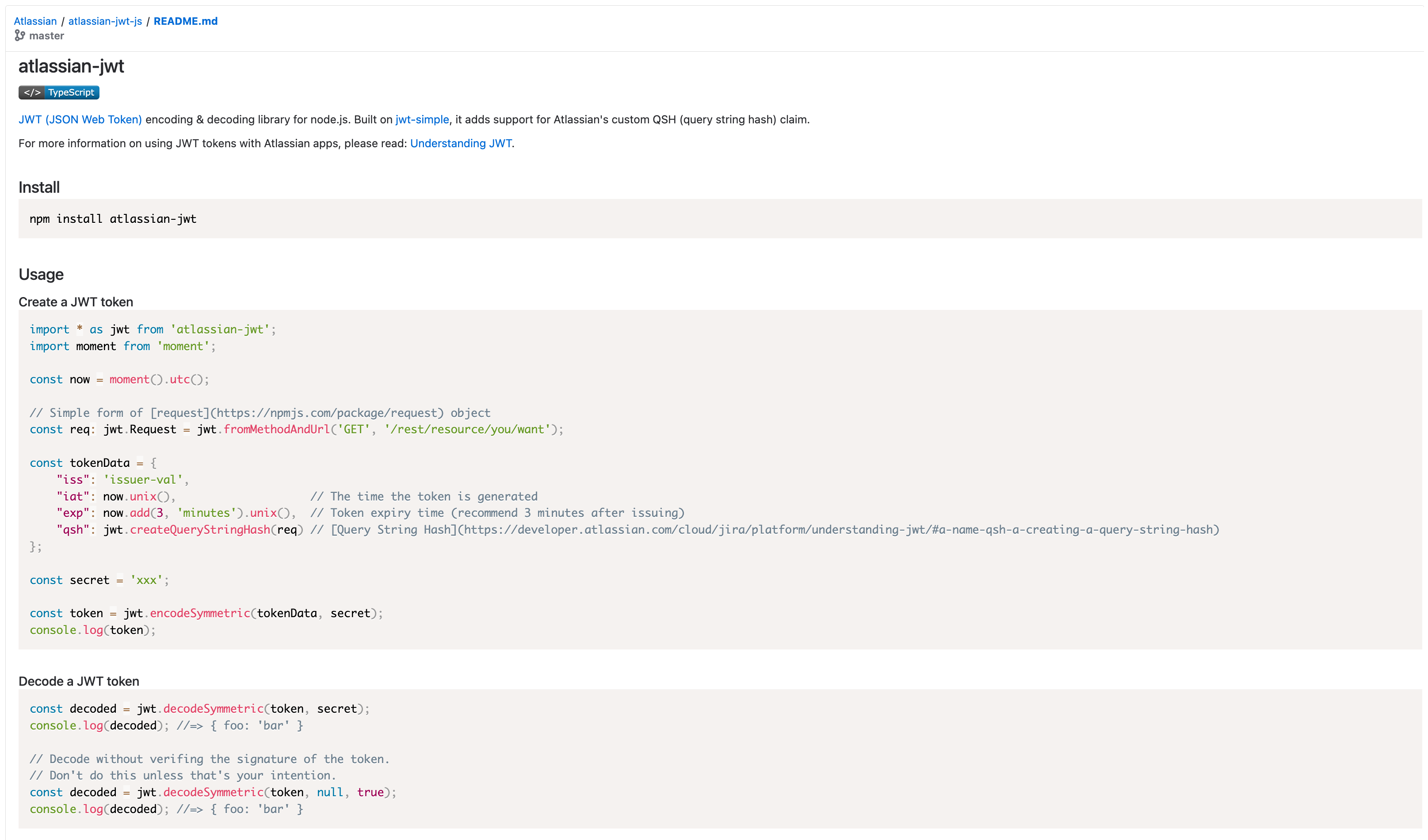
atlassian-jwt
JWT (JSON Web Token) encoding & decoding library for node.js. Built on jwt-simple, it adds support for Atlassian's custom QSH (query string hash) claim. For more information on using JWT tokens with Atlassian apps, please read: Understanding JWT. Install
npm install atlassian-jwt Usage
Create a JWT token
import * as jwt from 'atlassian-jwt'; import moment from 'moment'; const now = moment().utc(); // Simple form of [request](https://npmjs.com/package/request) object const req: jwt.Request = jwt.fromMethodAndUrl('GET', '/rest/resource/you/want'); const tokenData = { "iss": 'issuer-val', "iat": now.unix(), // The time the token is generated "exp": now.add(3, 'minutes').unix(), // Token expiry time (recommend 3 minutes after issuing) "qsh": jwt.createQueryStringHash(req) // [Query String Hash](https://developer.atlassian.com/cloud/jira/platform/understanding-jwt/#a-name-qsh-a-creating-a-query-string-hash) }; const secret = 'xxx'; const token = jwt.encodeSymmetric(tokenData, secret); console.log(token); Decode a JWT token
const decoded = jwt.decodeSymmetric(token, secret); console.log(decoded); //=> { foo: 'bar' } // Decode without verifing the signature of the token. // Don't do this unless that's your intention. const decoded = jwt.decodeSymmetric(token, null, true); console.log(decoded); //=> { foo: 'bar' } Miscellaneous Utilities
Algorithms
By default the algorithm to encode is The supported algorithms for encoding and decoding are If you use TypeScript: // Encode using HS256 (default) jwt.encodeSymmetric(payload, secret); // Encode using HS512 jwt.encodeSymmetric(payload, secret, jwt.Algorithm.HS512); // Encode using RS256, optinally accepts kid jwt.encodeAsymmetric(payload, privateKey, jwt.Algorithm.RS256, { kid: 'f50f8562-f146-4b98-9bbb-7ce9545603b6' }); // Decode using RS256 jwt.decodeAsymmetric(token, publicKey, jwt.Algorithm.RS256); If you use JavaScript: // Encode using HS256 (default) jwt.encodeSymmetric(payload, secret); // Encode using HS512 jwt.encodeSymmetric(payload, secret, 'HS512'); // Encode using RS256, optinally accepts kid jwt.encodeAsymmetric(payload, privateKey, 'RS256', { kid: 'f50f8562-f146-4b98-9bbb-7ce9545603b6' }); // Decode using RS256 jwt.decodeAsymmetric(token, publicKey, 'RS256'); Migrating from 0.1.x to 1.x.x
The A convenience method called import * as jwt from 'atlassian-jwt'; import { Request as ExpressRequest } from 'express'; const eReq: ExpressRequest = ...; const qsh = jwt.createQueryStringHash(jwt.fromExpressRequest(eReq)); Other methods, like Migrating from 1.x.x to 2.x.x
The Guides for developers
Publishing this library
Update To publish this library: npm run tsc npm publish This has been combined into a single command with: npm run build-and-publish Only the built TypeScript files will be published with this library. |
Include a Bitbucket source code file
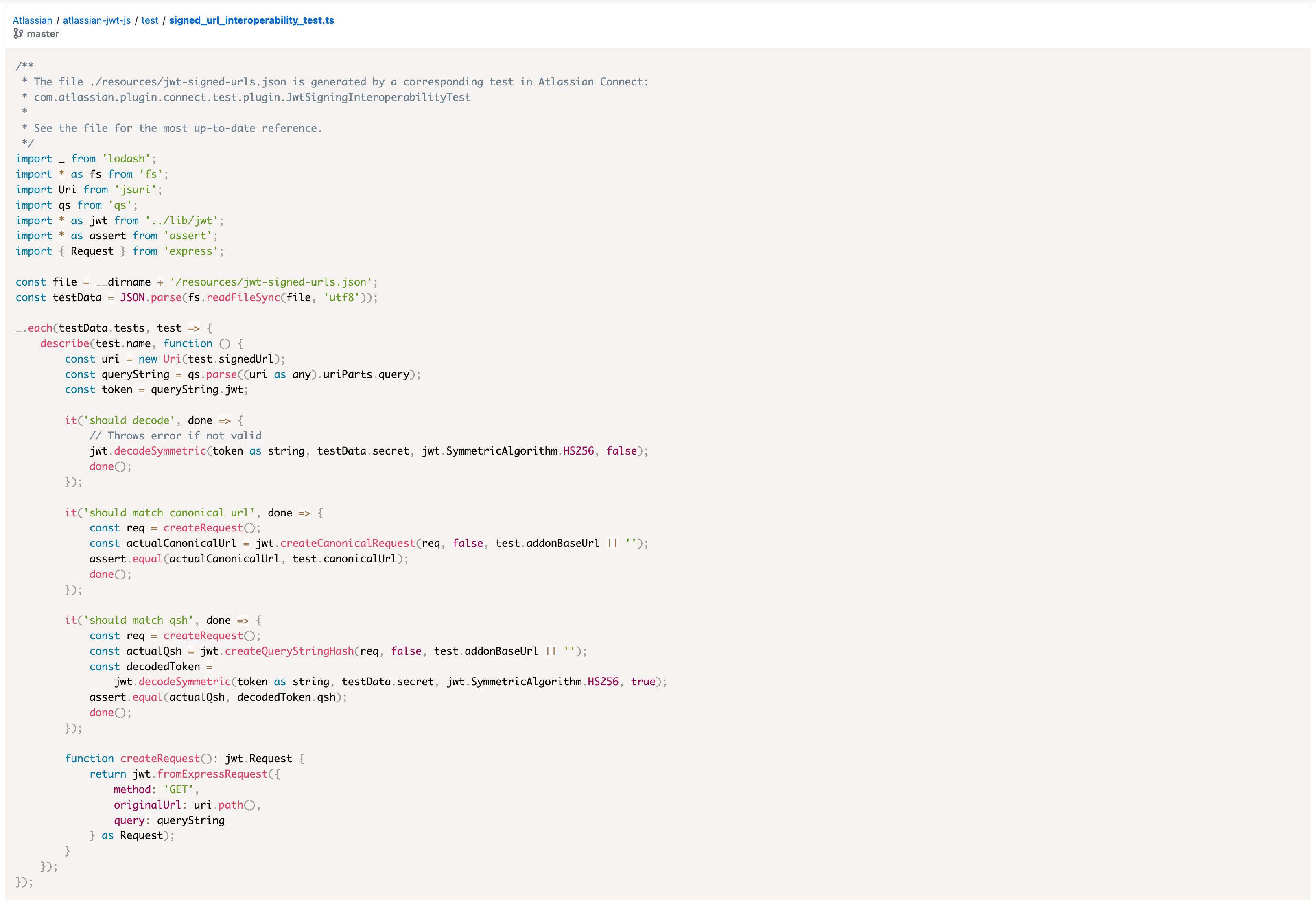
Here is a typescript file from the public repository atlassian/atlassian-jwt-js available at this url: https://bitbucket.org/atlassian/atlassian-jwt-js/src/master/test/signed_url_interoperability_test.ts.
|
/** * The file ./resources/jwt-signed-urls.json is generated by a corresponding test in Atlassian Connect: * com.atlassian.plugin.connect.test.plugin.JwtSigningInteroperabilityTest * * See the file for the most up-to-date reference. */ import _ from 'lodash'; import * as fs from 'fs'; import Uri from 'jsuri'; import qs from 'qs'; import * as jwt from '../lib/jwt'; import * as assert from 'assert'; import { Request } from 'express'; const file = __dirname + '/resources/jwt-signed-urls.json'; const testData = JSON.parse(fs.readFileSync(file, 'utf8')); _.each(testData.tests, test => { describe(test.name, function () { const uri = new Uri(test.signedUrl); const queryString = qs.parse((uri as any).uriParts.query); const token = queryString.jwt; it('should decode', done => { // Throws error if not valid jwt.decodeSymmetric(token as string, testData.secret, jwt.SymmetricAlgorithm.HS256, false); done(); }); it('should match canonical url', done => { const req = createRequest(); const actualCanonicalUrl = jwt.createCanonicalRequest(req, false, test.addonBaseUrl || ''); assert.equal(actualCanonicalUrl, test.canonicalUrl); done(); }); it('should match qsh', done => { const req = createRequest(); const actualQsh = jwt.createQueryStringHash(req, false, test.addonBaseUrl || ''); const decodedToken = jwt.decodeSymmetric(token as string, testData.secret, jwt.SymmetricAlgorithm.HS256, true); assert.equal(actualQsh, decodedToken.qsh); done(); }); function createRequest(): jwt.Request { return jwt.fromExpressRequest({ method: 'GET', originalUrl: uri.path(), query: queryString } as Request); } }); }); |
Include Bitbucket pull requests
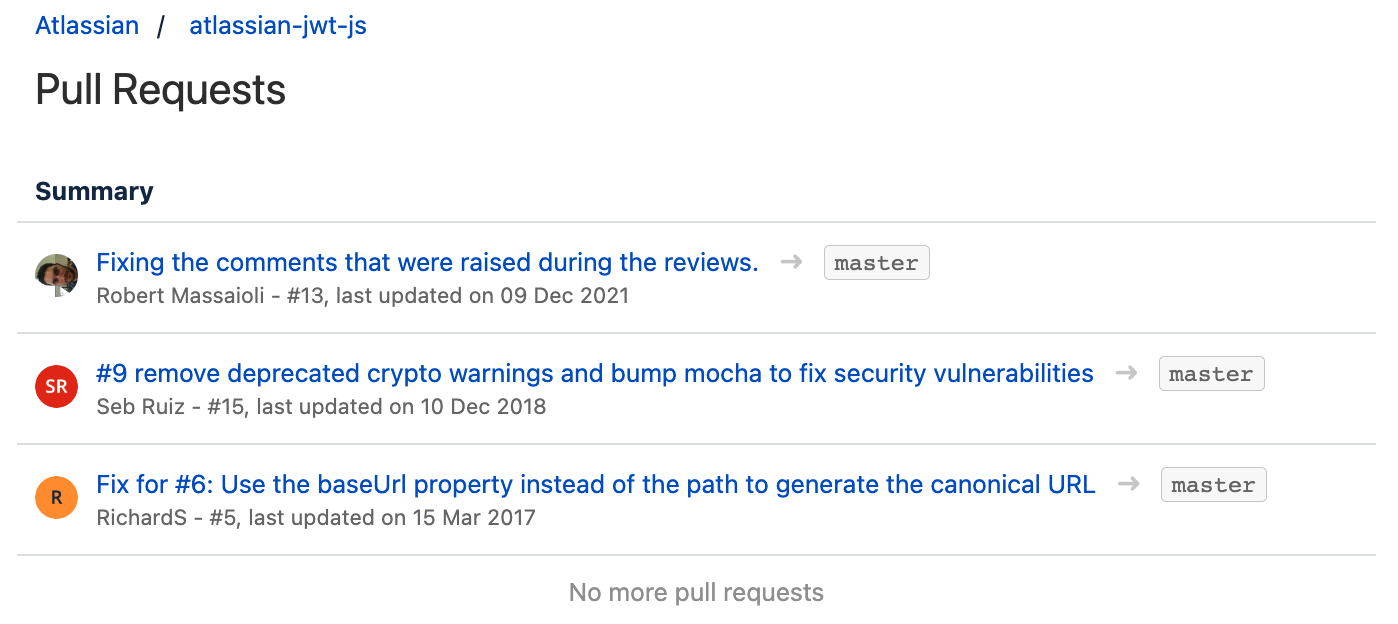
Here is an example of including the Pull Requests from the public repository atlassian/atlassian-jwt-js with the filters state="MERGED" AND title~"fix":
|
Include Bitbucket branches
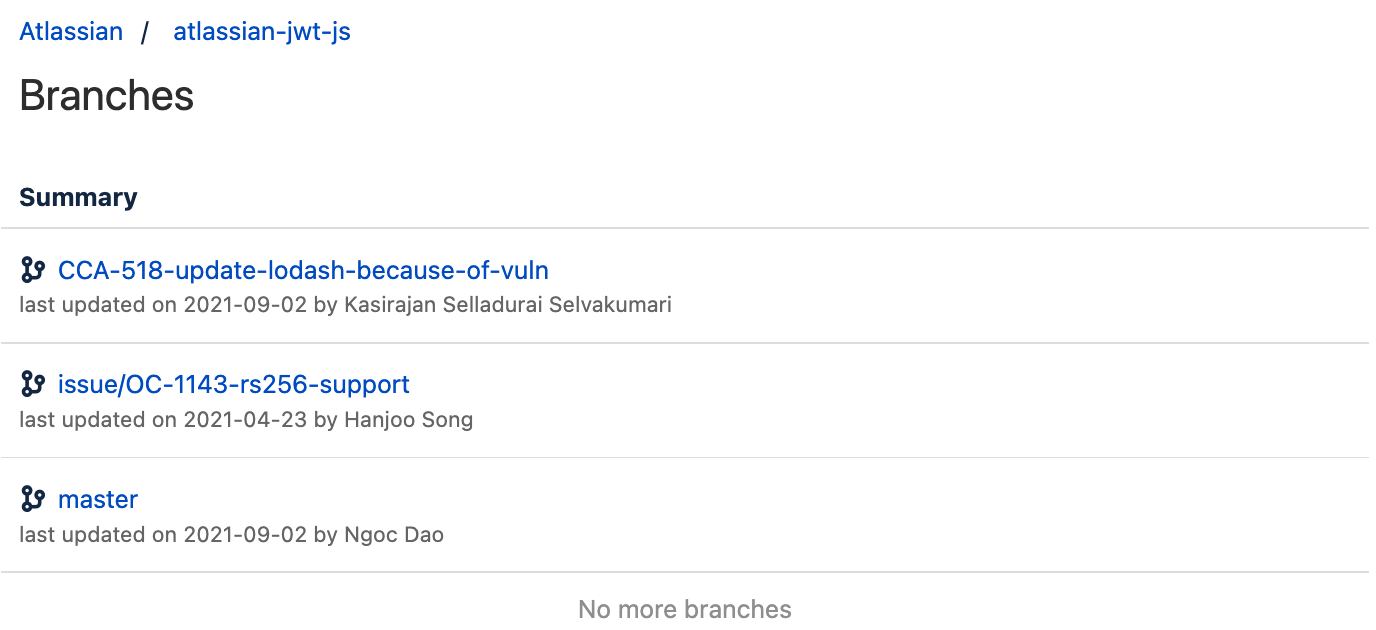
Here is an example of including the branches from the public repository atlassian/atlassian-jwt-js :
|
Include Bitbucket commits
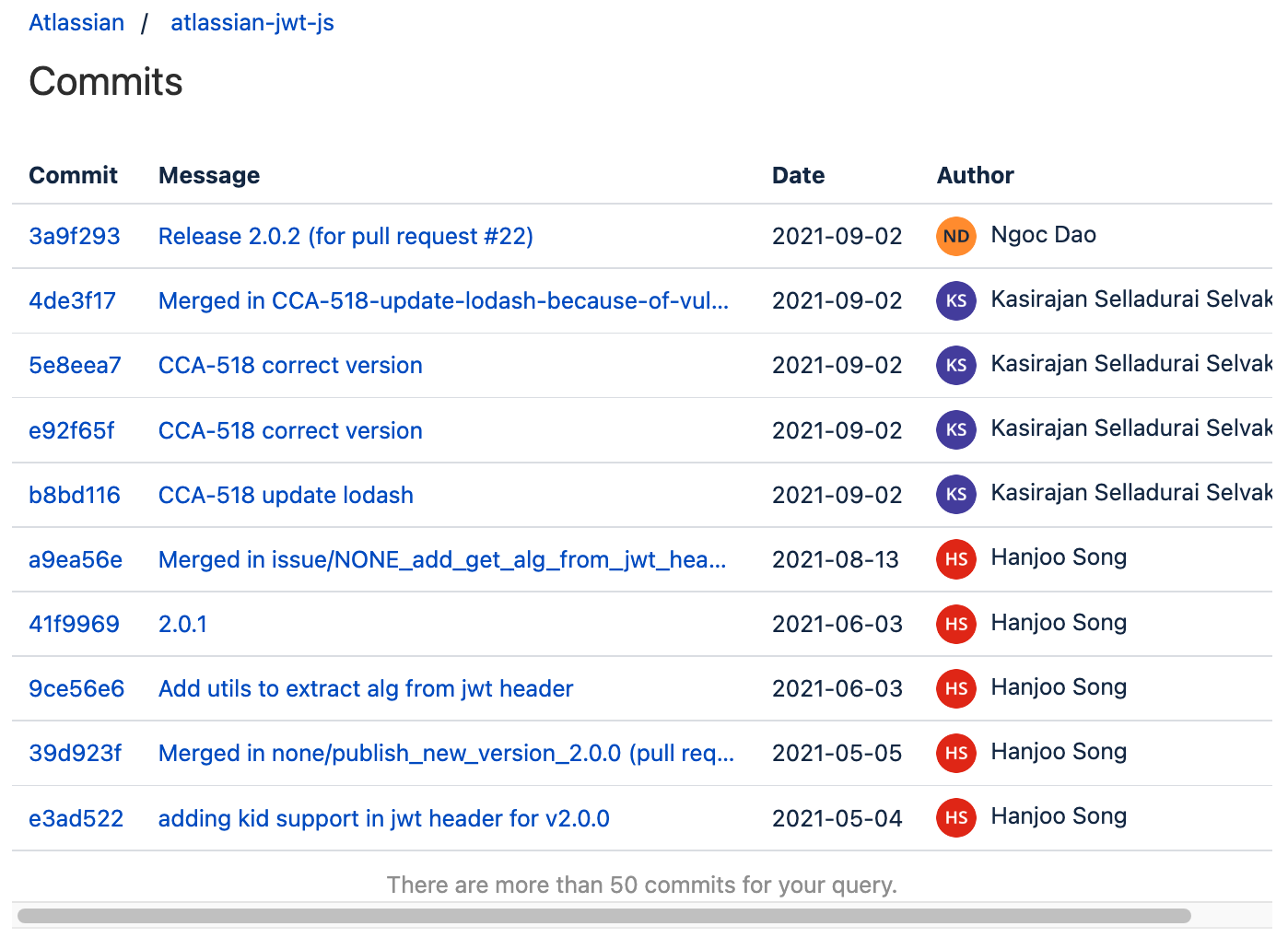
Here is an example of including commits from the public repository atlassian/atlassian-jwt-js :
|
Include Bitbucket tags
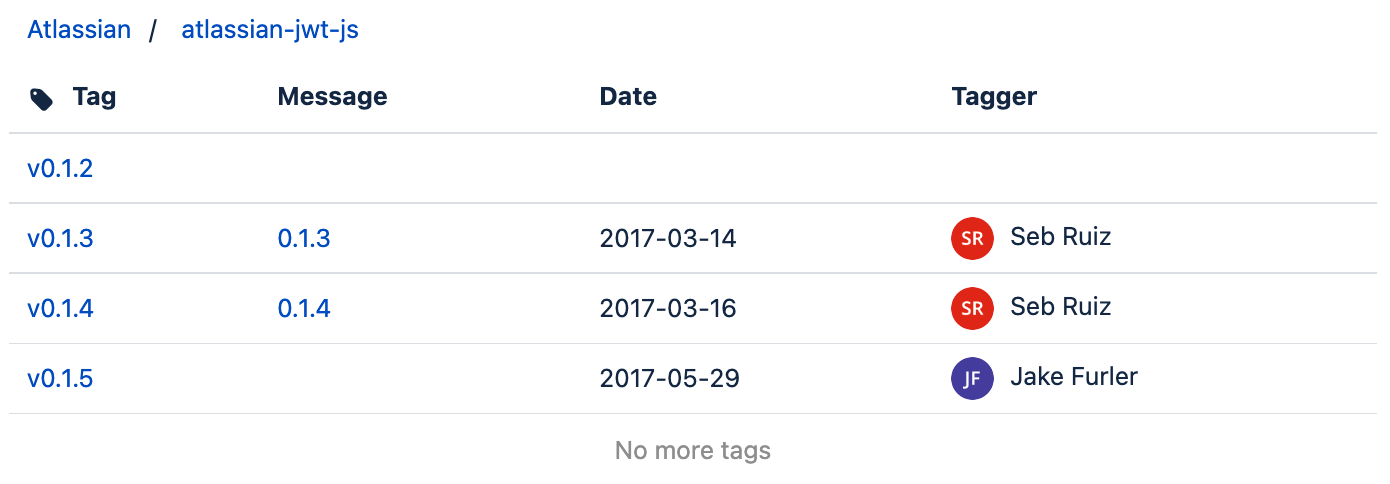
Here is an example of including the tags from the public repository atlassian/atlassian-jwt-js :
|
Include Bitbucket issues
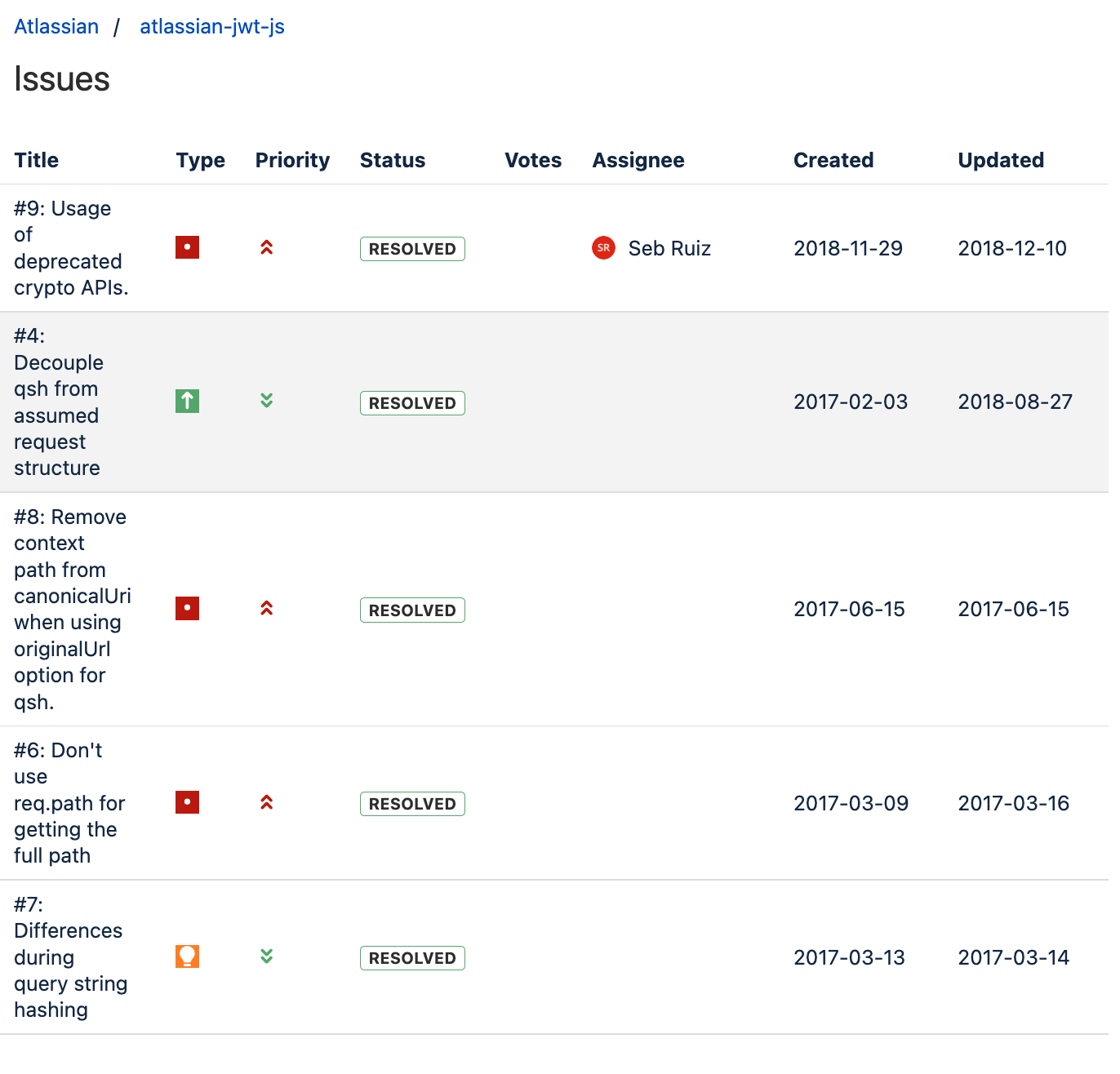
Here is an example of including the issues from the public repository atlassian/atlassian-jwt-js with the filters state="resolved":
|